
BITUS JOURNAL · Shipping & Logistics
Europe Special Line Logistics: Customs, Times, Cost Breakdown
Europe special line logistics explained: EU customs and IOSS rules, typical delivery times by country, and a full cost breakdown for 2026.
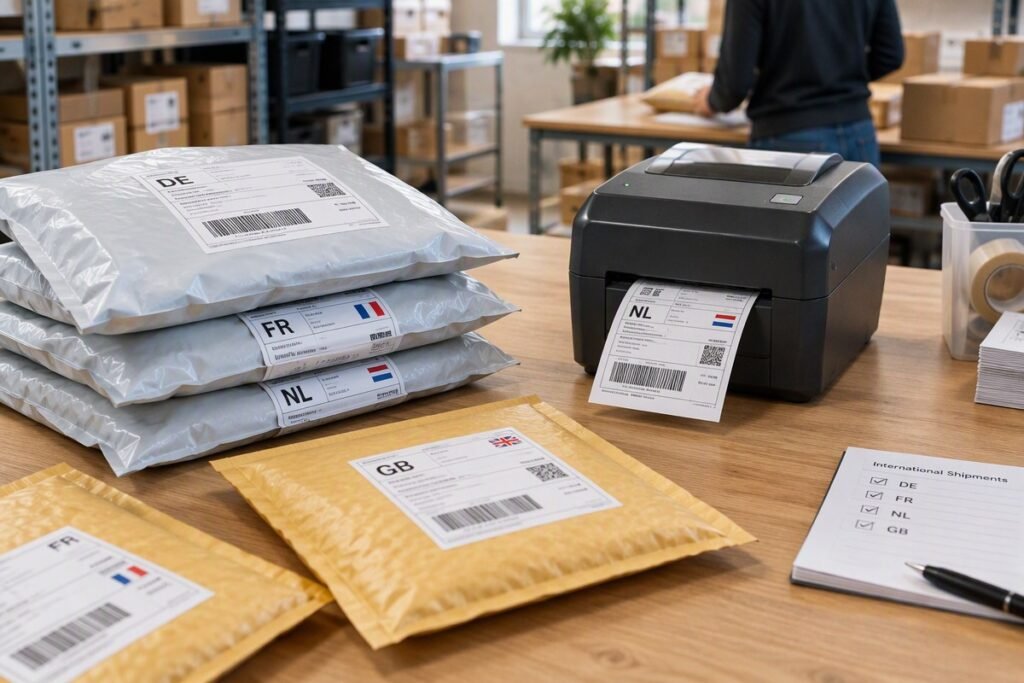
A Europe special line is a dedicated logistics channel built for shipping parcels from China to European destinations, typically delivering in 7–12 business days with end-to-end tracking. It works by consolidating parcels in China, flying them to a European hub, clearing customs in bulk under IOSS or DDP terms, and handing them to local carriers for last-mile delivery. For dropshippers, special lines are the standard way to offer Europeans delivery times that generic postal services cannot match.
Europe is more complex than the US lane because every parcel crosses a customs border with its own VAT regime. This guide explains how special lines handle EU and UK customs, what delivery times to expect by country, and how the costs break down.
What Is a Europe Special Line?
A special line (专线) is a door-to-door logistics product operated by a forwarder that controls the entire chain: first-mile pickup in China, international air freight, customs clearance at a European gateway, and last-mile delivery through a local postal or courier partner. Unlike generic services that hand parcels between unrelated carriers, a special line operator manages handoffs and is accountable for the full journey.
The key advantages for ecommerce sellers are consistency and customs handling. Because the operator pre-clears shipments in bulk and uses established customs brokers at its gateway airport, parcels avoid the random delays that plague standard postal flows — particularly valuable since every EU-bound parcel is subject to VAT assessment.
How Does EU Customs Work for Dropshipping Parcels?
Every commercial parcel entering the EU is subject to customs declaration and VAT. The system that matters most for dropshippers is IOSS — the Import One-Stop Shop.
What is IOSS and why does it matter?
Under EU rules in effect since 2021, the €22 VAT exemption for low-value imports was abolished. VAT is now due on all imported goods regardless of value. IOSS lets sellers (or their logistics providers) collect VAT at checkout and remit it through a single EU-registered intermediary, so parcels clear customs without the customer being charged again on delivery.
For a dropshipper, the practical implications are:
- Use a special line that supports IOSS/DDP. DDP (Delivered Duty Paid) means all VAT and duties are settled before or at import — the customer pays nothing extra on delivery. Special lines typically operate on DDP terms, which is why they produce far fewer “pay €15 to receive your parcel” complaints than DDU postal services.
- Register for IOSS or use your forwarder’s IOSS number. Many special line operators allow sellers to ship under the operator’s IOSS registration. Confirm this with your logistics provider before scaling EU volume.
- The €150 threshold still matters. Goods valued above €150 may attract customs duties in addition to VAT, depending on the product category. Most dropshipping parcels fall below this threshold, but check your category’s duty rate if you sell higher-ticket items.
What about the UK after Brexit?
The UK operates its own regime. Since Brexit, VAT is collected at the point of sale for consignments valued at £135 or less — the seller or marketplace must account for UK VAT, and parcels should arrive with no extra charges. Above £135, customs duties and import VAT are assessed at the border. A UK special line handles this by clearing through a UK broker and delivering DDP, typically via Royal Mail or a UK courier partner. Typical transit for a UK special line is 7–10 business days as of 2026.
How Long Does a Europe Special Line Take?
Transit times vary by destination country because last-mile networks differ. The table below shows typical 2026 ranges for a Europe special line, measured from warehouse dispatch in China to residential delivery.
| Destination | Typical transit time | Last-mile carrier (typical) |
|---|---|---|
| Germany | 7–10 business days | DHL / Hermes |
| France | 7–11 business days | Colissimo / Chronopost |
| Spain | 8–12 business days | Correos / SEUR |
| Italy | 8–12 business days | Poste Italiane / BRT |
| Netherlands | 7–10 business days | PostNL |
| Poland | 8–12 business days | Poczta Polska / DPD |
| United Kingdom | 7–10 business days | Royal Mail / Evri |
| Rest of EU | 9–14 business days | National post / DPD / GLS |
These are industry-typical ranges, not guarantees. Southern and Eastern European destinations generally take longer than Western Europe due to less frequent line-haul connections and slower local networks. During Q4 peak season, add 3–5 business days across the board. Note that “business days” here excludes both Chinese and destination-country holidays.
Why do times vary so much within Europe?
Three factors drive the spread. First, flight frequency: major gateways like Frankfurt, Amsterdam, and London receive daily cargo capacity, while smaller markets may be served a few times per week. Second, customs processing speed differs by gateway — some airports clear ecommerce parcels in hours, others in days. Third, last-mile quality varies enormously: Germany’s DHL network delivers next-day after handoff, while some Southern European postal operators add several days.
What Does Europe Special Line Shipping Cost?
Special line pricing is typically quoted per kilogram with a volumetric divisor, plus a per-parcel handling fee. The table below shows the cost structure — illustrative 2026 ranges for a typical 200–500g parcel, which covers most dropshipping products.
| Cost component | Typical range (200–500g parcel) | Notes |
|---|---|---|
| Line-haul + clearance | Varies by forwarder and season | Usually 60–75% of total cost |
| IOSS VAT handling | Often included | Confirm DDP terms in writing |
| Last-mile delivery | Included in line rate | Via local postal/courier partner |
| Fuel surcharge | 5–15% of line-haul | Fluctuates with oil prices |
| Remote area surcharge | Varies | Applies to islands, rural zones |
Actual rates move with fuel prices, air freight capacity, and seasonal demand — Q4 rates can run 20–40% above summer levels. Always get a written quote for your specific product weight and destination mix rather than relying on published price lists. Sellers shipping more than a few hundred parcels per month should negotiate tiered rates.
How does a special line compare to standard postal services?
A standard option like Yanwen or unregistered China Post to Europe typically takes 15–30 business days and often arrives DDU — meaning the customer may face a VAT/duty collection fee plus a handling charge from the local post. The headline shipping cost is lower, but the total customer experience cost (delays, surprise fees, support tickets, chargebacks) is usually higher. For stores building a brand rather than chasing one-off sales, the special line’s DDP delivery is almost always the better economics.
How Do You Choose the Right Europe Special Line?
Not all special lines are equal. Evaluate providers on these criteria:
- DDP and IOSS support in writing. If the forwarder cannot confirm delivered-duty-paid terms and IOSS handling, keep looking.
- End-to-end tracking. You need tracking that works on the destination country’s local carrier site, not just a forwarder dashboard.
- Gateway and country coverage. Confirm the line actually serves every country you sell to — some “Europe lines” only cover Western Europe well.
- Peak-season track record. Ask how the provider performed last Q4: what were actual average transit times in December?
- Claims process. Lost and damaged parcels happen. A good forwarder has a documented claims process with clear compensation terms and timelines.
- VAT invoicing. Ensure you receive proper documentation for the VAT collected, which you will need for your own tax filings.
How Bitus Handles Europe Fulfillment
Bitus is a Shenzhen-based fulfillment company serving sellers across European markets. Rather than piecing together forwarders yourself, you work with a single partner that manages the Europe lane:
- Europe special line options with DDP delivery terms, so your customers are not hit with surprise customs charges at the door.
- Full quality inspection on every order before dispatch — defective products caught in Shenzhen never become expensive cross-border returns.
- A named dedicated agent reachable by WhatsApp and email, who can advise on IOSS handling, the right line for each destination country, and current transit conditions.
- No setup fees or monthly fees — you pay per order fulfilled, and sourcing quotes are free.
See the dropshipping fulfillment page for the full service setup, or check the FAQ page for answers on logistics options and fees.
FAQ
What is a Europe special line in dropshipping? A Europe special line is a dedicated door-to-door logistics channel from China to European destinations, typically delivering in 7–12 business days with end-to-end tracking. The operator manages pickup, air freight, bulk customs clearance, and last-mile handoff to a local carrier.
Do I need IOSS to dropship to the EU? If you sell to EU consumers, VAT must be accounted for on every parcel regardless of value. You can register for IOSS yourself or ship under your logistics provider’s IOSS registration — many special line operators offer this. Without proper IOSS/DDP handling, customers may face collection fees on delivery.
How long does shipping from China to Germany take? Via a Europe special line, typical transit to Germany is 7–10 business days as of 2026. Standard postal options take 15–30 business days and may arrive with VAT collection charges for the recipient.
What is DDP shipping and why does it matter for Europe? DDP (Delivered Duty Paid) means all VAT, duties, and clearance costs are settled before delivery, so the customer pays nothing extra. For European ecommerce, DDP delivery dramatically reduces refused parcels, bad reviews, and support tickets compared to DDU (unpaid) shipping.
Is the UK handled differently from the EU? Yes. Post-Brexit, the UK has its own VAT-at-point-of-sale regime for goods up to £135 and separate customs procedures above that threshold. Use a dedicated UK special line rather than assuming an EU line covers Britain equally well.
Selling to Europe and tired of customs complaints? Get a free quote — tell a Bitus agent your product types and destination countries, and get a recommended Europe shipping setup within 24 hours.
Tell us what you sell — get a sourcing & fulfillment quote within one working day.