
BITUS JOURNAL · Branding & Packaging
Dropshipping vs Private Label: Which is Right for You?
Dropshipping vs private label: compare startup costs, profit margins, risks, and branding control side by side — and learn exactly when to switch models.
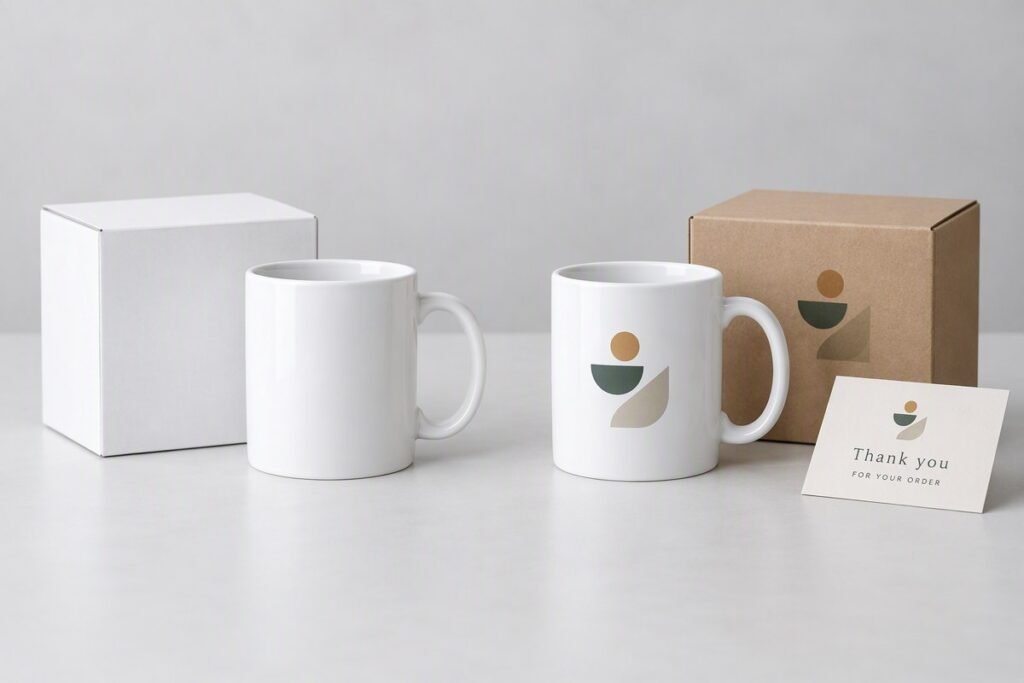
Dropshipping and private label are two different ways to sell physical products online. With dropshipping, you sell existing products without holding inventory — fast to start, but with thinner margins and little brand control. With private label, you put your own brand on products you source — higher margins and real brand equity, but it requires upfront investment and inventory risk. The right choice depends on your budget, experience, and goals.
What is the difference between dropshipping and private label?
| Factor | Dropshipping | Private Label |
|---|---|---|
| Startup cost | $300–$800 | $2,000–$10,000+ |
| Inventory | None — supplier ships per order | You buy and store stock upfront |
| Minimum order quantity | Zero | Usually 100–500+ units |
| Typical net margin | 15–30% | 30–60% |
| Brand control | Very little — generic packaging | Full — logo, packaging, inserts |
| Time to launch | Days | Weeks to months |
| Financial risk | Low — pay only after customers pay you | Higher — unsold stock is your loss |
| Best for | Beginners and product testing | Scaling brands building long-term equity |
In short: dropshipping optimizes for speed and low risk, while private label optimizes for margin and brand value.
How much more profitable is private label?
Private label is usually significantly more profitable per unit, for three reasons. First, buying in bulk lowers your per-unit product cost. Second, branded products command higher prices — customers pay more for packaging and perceived quality. Third, branded sellers face less direct price competition, since competitors can’t list the exact same product as easily.
Most sellers report net margins of roughly 15–30% with dropshipping after ad spend, versus 30–60% with established private label products. The tradeoff is capital: that extra margin has to cover your inventory investment, storage, and the risk that a product doesn’t sell.
When should you switch from dropshipping to private label?
Look for these signals that a product — or your store — is ready to graduate:
- Consistent sales volume. A product selling steadily for several weeks proves demand is real, not a fad.
- Customers ask about your brand. When buyers start recognizing your store name, branding starts paying for itself.
- Competitors copy your listings. Private label packaging makes you much harder to undercut.
- Rising return rates. Generic products in plain packaging generate more “not as described” complaints than branded ones.
- You have capital to invest. A first production run typically needs a few thousand dollars for product, packaging, and freight.
Many successful sellers never fully “switch” — they keep dropshipping new products for testing while their proven winners run as private label lines.
What are the risks of private label?
- Inventory risk. If the product flops, you’re stuck with stock you paid for.
- Cash flow pressure. Money sits in inventory instead of funding ads or new products.
- Longer timelines. Sampling, packaging design, production, and sea or air freight add weeks before you can sell.
- Quality responsibility. With your brand on the box, every defect is your reputation — factory-level QC becomes essential.
These risks are manageable, but they’re real. That’s why testing demand with dropshipping first is such a common strategy.
Can you run both models at the same time?
Yes — and many experienced sellers do. The hybrid approach works like this: use dropshipping to test 10–20 products with zero inventory risk, then convert the 1–2 winners into private label products with custom packaging. The dropshipping side keeps feeding you new product ideas while the private label side delivers the margins.
This only works smoothly if one partner can handle both models. Splitting fulfillment between a dropship supplier and a separate private label factory doubles your coordination work and your points of failure.
How long does it take to become profitable with each model?
| Phase | Dropshipping | Private Label |
|---|---|---|
| First sale | Days after launching ads | 4–10 weeks (production + freight) |
| Breakeven on testing | Often within the first month if a product hits | After the first production run sells through |
| Meaningful profit | 1–3 months of systematic testing | 3–6 months including development time |
Dropshipping pays you for speed: you can validate ten product ideas in the time it takes to develop one private label product. Private label pays you for patience: slower to start, but each winner compounds because competitors can’t clone your branded listing overnight.
The practical implication is to use dropshipping’s speed to buy information. Every product you test teaches you what your market actually wants — price sensitivity, feature preferences, packaging expectations. That information makes your eventual private label bets dramatically safer, because you’re investing inventory dollars into demand you’ve already proven rather than guessing.
Many sellers describe the journey in three stages: months 1–3 dropshipping to learn and generate cash flow, months 4–6 converting the best 1–2 products to private label, and month 6+ running a hybrid where new ideas are tested lean and winners get branded. There’s no prize for picking one model forever — the prize goes to sellers who use each model for what it’s best at.
How Bitus helps: one upgrade path, one partner
Bitus is built for sellers who want to start lean and grow into a brand. You can begin with dropshipping from just 5 orders per day — no setup fees, no monthly fees, full quality inspection on every order — and when a product proves itself, graduate to private label under the same roof: custom boxes, thank-you cards, branded stickers, hang tags, and tape, all managed by the same named dedicated agent who already knows your products.
That continuity matters. Your agent already understands your quality standards and your customers, so the jump from generic to branded doesn’t mean starting over with a new factory, new QC process, and new shipping setup.
Explore the next step: Private Label / OEM
FAQ
Can I start with private label as a complete beginner? You can, but it’s risky. Without validated demand, you may invest thousands in a product nobody wants. Most advisors recommend testing with dropshipping first, then going private label on proven winners.
How many units do I need for my first private label order? It varies by product and factory, but first runs are commonly in the hundreds of units. Your sourcing partner can advise on sensible quantities based on your current sales data.
Does private label mean I need my own warehouse? No. Fulfillment companies can receive your bulk inventory, store it, and pick, pack, and ship individual orders — you get the branding benefits without leasing warehouse space.
How long does it take to launch a private label product? Typically 4–10 weeks from approved sample to sellable stock, depending on packaging complexity and freight method. Simple custom packaging on an existing product is much faster than developing a product from scratch.
Can I switch back from private label to dropshipping? Yes, and sellers do it more often than you’d think — usually when testing new product ideas alongside their branded line. Running both models is normal; the key is using each where it fits best.
Ready to build your brand?
Whether you’re starting with dropshipping or ready to go private label, talk to a Bitus agent for a free quote — one partner for the whole journey: Get a free quote
Tell us what you sell — get a sourcing & fulfillment quote within one working day.